How to Size Your Solar and Battery System: A Step-by- Step Method
August 19, 2026
The $4,600 Battery Everyone Is Talking About… But Almost Nobody Is Asking the Right Questions
September 9, 2026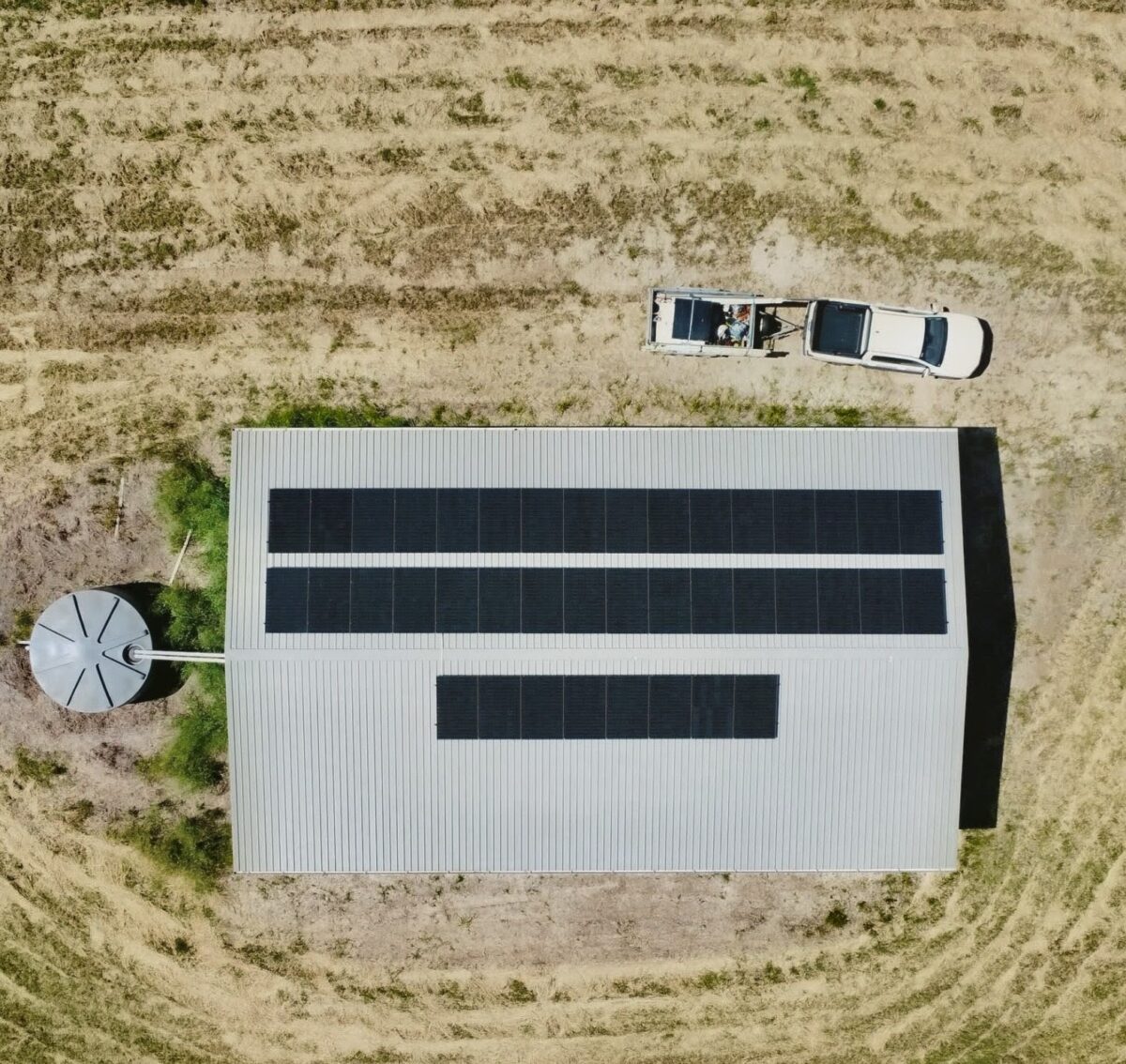
We’ve helped a lot of clients make the jump from running a diesel generator to a full solar and battery off-grid system. It’s some of the most satisfying work we do, because the difference in people’s lives is immediate and permanent.
One client in the Northern Territory was pouring a genuinely alarming amount of money into diesel every year. We put in a solar and battery system — financed, not paid upfront — and her savings went through the roof. She’s now putting money into a savings account with what used to disappear into the fuel tank. She still calls us once a month just to say g’day.
But this isn’t a feel-good story. It’s a maths story. Here’s the actual arithmetic behind why so many rural and remote property owners are making this move.
First, why people end up on a generator in the first place
If you’re on a rural block outside the network, getting a grid connection isn’t a formality — it’s a construction project. Depending on distance and terrain, a connection quote can run into the tens of thousands of dollars. We’ve seen quotes around the $50,000 mark in Ergon territory.
And here’s the kicker: after you’ve paid that $50,000, you don’t own anything. You’ve bought the right to start paying a daily service charge plus your usage — forever. Miss the payments and you get disconnected, and you’re back to square one with nothing to show for it.
So people quite reasonably think: stuff that, I’ll run my own generator. It’s an easy purchase, it’s available today, you top it up and you’re done.
That logic holds up fine in the short term. It falls apart over the long term — and off-grid properties are very much a long- term proposition. In normal suburbia people move every seven to ten years. Off-grid owners tend to stay put far longer. You’re not making a decision for the next few years; you’re making one for the next few decades.
What diesel actually costs per kilowatt-hour
This is the number almost nobody calculates, and it’s the one that matters.
A generator burns roughly 0.28 litres of diesel per kilowatt-hour produced. So:
0.28 L × $2.33/L = ~65c per kWh
Compare that to a grid rate of around 30c/kWh in Ergon territory. Diesel is already more than double the cost of grid power — and that’s before you touch the generator itself.
And smaller generators are worse, not better
Here’s the trap. A small, cheap generator has to work much harder to deliver the same output, so its fuel efficiency drops. A small unit running near its limit can push you closer to 93c per kWh.
So the pattern looks like this:
| Generator | Typical cost per kWh vs grid |
|---|---|
| Quality unit (~$7,500) | ~2× |
| Cheap unit (~$4,500) | ~3× |
Going cheaper on the generator costs you more in the long run. You save $3,000 at purchase and hand it back — with interest — at the pump.
Then add everything the sticker price doesn’t include: servicing, oil changes, filters, fuel cartage, the noise, the vibration, and the fact that something has to be running for you to have lights on.
Now run the same numbers on solar and battery
Let’s take that $50,000 grid connection figure and spend it on a solar and battery system instead. Same money, completely different outcome — because this time you own the asset.
Spread across a 30-year system life:
- $50,000 ÷ 30 years = $1,666 per year
- ÷ 52 weeks = ~$32 per week
- ÷ 7 days = ~$4.50 per day
Now, what does that buy you? A system in that range — say around 50 kW of solar with matched battery storage — will produce roughly 84 kWh per day. That’s a substantial amount of energy; plenty for a family home with all the usual loads and then some.
So what are you actually paying per kilowatt-hour?
$1,666 per year ÷ (84 kWh × 365 days) = ~5c per kWh
Line them up side by side
| Option | Effective cost | What you own at the end |
|---|---|---|
| Grid connection | ~$50,000 upfront, then ~30c/kWh forever + daily supply charge | Nothing |
| Diesel generator | ~65–93c/kWh + capital + servicing + fuel cartage | A worn-out generator |
| Off-grid solar & battery | ~5c/kWh over 30 years | A working power system |
That’s not a marginal difference. That’s an order of magnitude.
And the 5c figure is locked in. If diesel goes to $3 a litre, it doesn’t touch you. If retail electricity keeps climbing — and it will — it doesn’t touch you either. You’ve taken your single largest recurring utility cost and converted it into a fixed, known number for three decades.
The part that actually matters: doing it properly
None of the above means much if the system is designed badly. Off-grid is not grid-connect solar with a battery bolted on. There’s no network sitting behind you to cover a shortfall — if the design is wrong, you sit in the dark.
That’s why off-grid work demands a much higher level of due diligence:
- Sizing for the worst case, not the average. A system has to carry you through a run of heavily overcast days in the wet season, not just perform well in October.
- Accredited installers only. All of our off-grid installers hold current off-grid accreditation — it’s non-negotiable.
- Genuine experience, not a fresh ticket. We require a minimum of five years working specifically in the off-grid space. Not someone who just picked up the accreditation last month and is learning on your property.
When you’re the entire power network for your own home, the margin for error is zero. That’s a level of care we take seriously, because our clients live with the result every single day.
The bottom line
Diesel is a good short-term supplement. It’s a poor long-term solution.
You can keep paying two to three times the cost of energy for power that’s loud, needs constant maintenance, and leaves you exposed every time fuel prices move. Or you can invest once in a system that produces power at around 5c/kWh, runs silently, keeps your family’s lights on through the wet season, and belongs to you.
That’s why so many people are making the switch — and why we’ve built our off-grid capability around getting it right the first time.
On a rural or remote property and tired of the generator?
TSBA designs and installs full off-grid solar and battery systems with accredited, experienced off-grid installers — and can help you look at finance so the system funds itself out of what you’re already spending on diesel.