
Why Off-Grid Solar Beats a Diesel Generator (The Numbers, Not the Sales Pitch)
August 20, 2026
Congratulations, You Negotiated A Cheaper Electricity Rate… Now Let’s Talk About The Part That’s Actually Costing You Money
September 11, 2026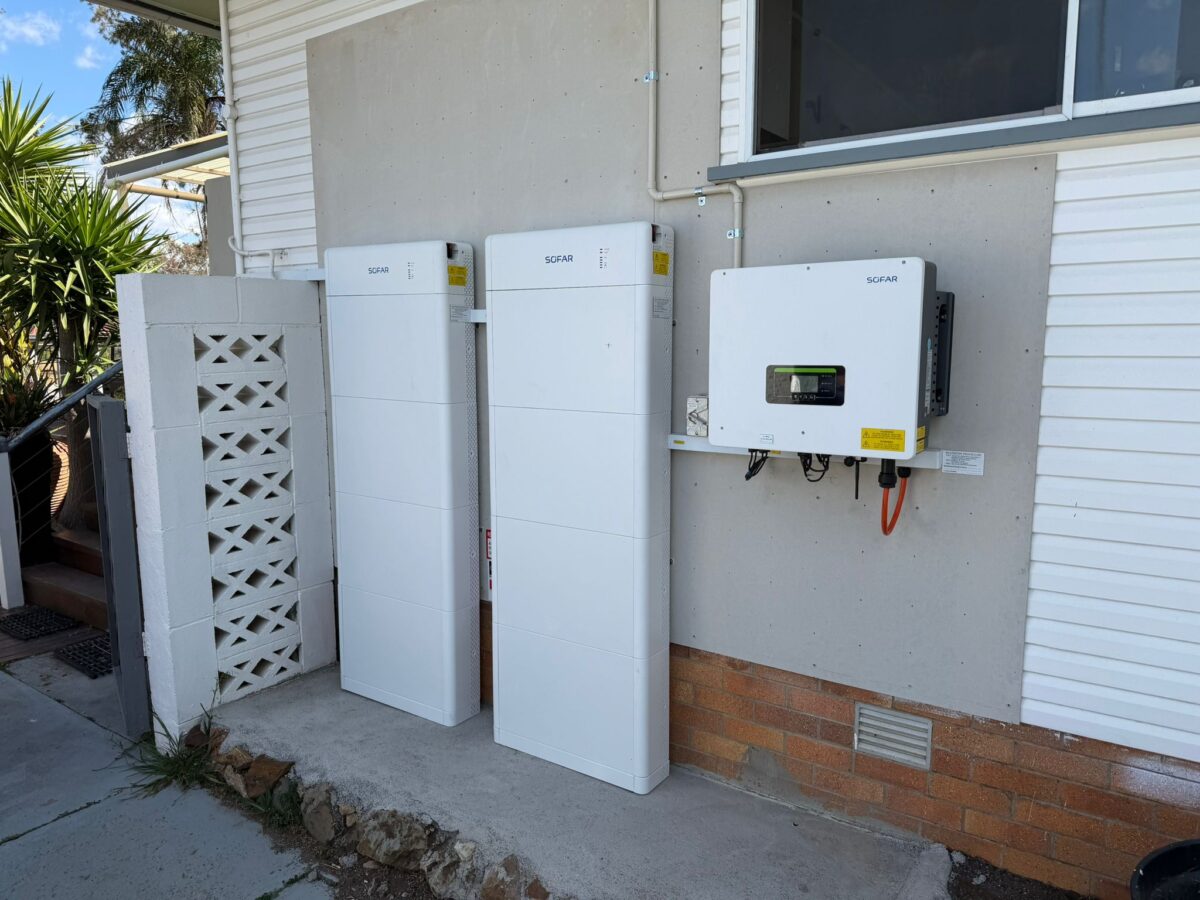
If you’ve been scrolling through Facebook lately, you’ve probably seen it.
“30kWh battery for around $4,600 after rebates.”
Remember when the car salesman said it was a good deal and it wasn’t?
Some advertisements even suggest you’ll recover your money in almost a year. At first glance, it sounds like the deal of the decade.
But here’s the question every homeowner should ask:
If battery technology has suddenly become this cheap, why isn’t every major manufacturer in Australia selling the same thing?
The truth is, in solar, there are very few shortcuts.
If one company is dramatically cheaper than everyone else, something has usually changed. The question is whether that change affects performance, installation quality, future compatibility or long-term support.
The Numbers Sound Incredible. That’s Exactly Why You Should Question Them.
A battery paying for itself in around one year would be one of the BIGGEST breakthroughs the Australian solar industry has ever seen.
Yet experienced installers across the industry remain sceptical.
Why? Because a battery’s value isn’t measured by how many kilowatt-hours are printed on the brochure. It’s measured by how much usable energy it can actually deliver when your home needs it.
That’s where many homeowners get caught out.
A Big Battery Doesn’t Always Mean Big Performance
Imagine buying a truck that can carry 30 tonnes.
Now imagine the road leading to your house only allows five tonnes at a time.
The truck’s capacity doesn’t matter if it can’t deliver it fast enough. That’s similar to what can happen when a very large battery is paired with a relatively small battery inverter. Some AC-coupled battery systems use a 5kW inverter with a much larger battery capacity.
While the battery may store plenty of energy, the inverter controls how quickly that energy can move in and out. That creates two important limitations:
1. Charging and Discharging Can Become Slower Than You Expect
Your solar panels might be producing far more energy than the battery inverter can accept. Imagine exporting to the grid when the battery is at 23% charge.
Instead of storing all that excess solar energy, the battery can only charge at the inverter’s maximum rate.
Depending on your system size, weather conditions and daylight hours, that may reduce how effectively the battery reaches full capacity.
2. Your Battery May Still Leave You Buying Power From The Grid
This surprises many homeowners.
A 30kWh battery sounds enormous.
But if your home suddenly demands more than 5kW, your battery can’t deliver beyond its inverter’s limit.
Imagine you’re running:
- The air conditioner
- The oven
- The kettle
- The dishwasher The clothes dryer
Many Australian homes can exceed 5kW without even trying. The average base load (“nothing running” mentality) is 1kW. Meaning you are only 4kW off from buying power again.
When that happens, your home may still need electricity from the grid even though your battery still contains plenty of stored energy.
That’s not what most people imagine when they hear “30kWh battery.”
What Happens When Your Solar Inverter Eventually Dies?
Most solar inverters don’t last forever.
Eventually they’ll need replacing.
AC-coupled battery systems don’t include their own dedicated solar inputs. Instead, they rely on your existing solar inverter.
That means future compatibility can become another consideration whenever your solar inverter reaches the end of its life. A really good business to be in in a few years time would be an ‘AC couple inverter replacement company’.
It’s another question worth asking before signing a contract, not after.
Cheap Installations Often Hide Expensive Problems
Every home is different.
Some battery installations are simple.
Others require:
- Switchboard upgrades
- Longer cable runs
- Additional safety equipment
- Trenching
- Structural mounting
- Extra labour to meet Australian Standards
A proper battery installation can legitimately cost several thousand dollars in labour depending on the complexity.
We’ve heard from installers who say some companies allocate around $1,500 for installations regardless of how difficult the job is.
If that’s true, it raises an important question.
Can every installation really be completed properly for the same price? Or is the installer expected to simply make it fit within budget?
The Contract Is Where The Real Price Often Appears
Many homeowners focus only on the advertised price. Very few read every page of the contract.
That’s where words like:
“Not liable”
“Not responsible”
“Additional works”
“Unforeseen costs”
can become important.
To be fair, every installer may encounter genuine unforeseen issues.
No company can predict every hidden cable or underground obstacle.
The difference is whether the company has taken the time to properly assess your property before quoting.
A thorough site inspection protects both the homeowner and the installer.
It reduces surprises.
It creates realistic expectations.
Most importantly, it helps avoid unexpected costs later.
Why Quality Companies Sometimes Cost More
People often ask why one battery quote is thousands of dollars more than another. The answer isn’t always bigger profit.
Sometimes it’s because the quote already includes:
- A detailed site assessment
- Higher-quality equipment
- Better inverter sizing
- Proper electrical upgrades
- Experienced installers
- Future service support
- Compliance with Australian Standards
Those things don’t always show up on a Facebook advertisement. But they matter long after the advertisement has disappeared.
Ask These Questions Before You Buy Any Battery
Before signing anything, ask your installer:
- What is the battery inverter size?
- How quickly can the battery charge and discharge?
- Will my home still import power if I use more than the inverter output?
- How does the battery integrate with my existing solar system?
- What happens if my current solar inverter fails in the future?
- Has my property been properly assessed before quoting?
- What additional costs could still be added after I sign?
If your salesperson can’t clearly answer those questions, keep asking.
The Cheapest Battery Isn’t Always The Cheapest Decision
Everyone wants value. Nobody wants to overpay.
But there is a big difference between buying a product that is competitively priced and buying one that’s simply the cheapest on the market.
Solar and battery systems are long-term investments.
They should still be working for you ten or fifteen years from now. The purchase price is only one part of that decision.
Performance. Reliability. Compatibility. Installation quality. Support.
Those are the things you’ll still care about years after you’ve forgotten what you paid.
So before you get excited by a battery that seems unbelievably cheap, ask yourself one final question.
Am I buying a battery… or am I buying a problem I’ll only discover after it’s installed?
Sometimes the most expensive decision isn’t paying more upfront.
It’s choosing the cheapest option and finding out later why it was so cheap.
Now that you know the right questions to ask, work out the answers for your own home. Our step-by-step method shows you how to calculate the solar and battery size you actually need — using nothing more than your power bill and a calculator.
Want a battery quote that holds up under questioning?
Trusted Solar Bigger Advantage assesses your property properly before we quote — correct inverter sizing, realistic installation costs, and no surprises buried in the contract. You’ll see the working behind every number.
Book a free site assessment