
The 100kW ceiling just became a 1MW ceiling
August 6, 2026
You Didn’t Miss The Rebate. It Just Got Better.
August 19, 2026
60% of Inspected Battery Installs Were Substandard. We’re Replacing 2–3 of Them a Week.
If you’ve seen the recent news coverage about complaints piling up against solar retailers operating under the Cheaper Home Batteries Program, none of it will surprise anyone who works in this industry every day.
We’re not going to name companies. We don’t need to. The regulator’s own numbers tell the story better than any current affairs segment can.
What the Clean Energy Regulator actually found
Between July 2025 and April 2026, the Clean Energy Regulator carried out 1,278 compliance inspections on home battery systems installed under the Cheaper Home Batteries Program.
60.8% of inspected installations were rated substandard
1.2% were rated unsafe
Read that again. Six in ten. And here’s the part that matters most for anyone shopping on price right now: the faults weren’t with the batteries themselves. They were with the way the batteries had been installed.
The inspection sample covered roughly half a percent of all systems installed under the program. It’s a small sample, so nobody should pretend it’s a perfect national picture. But if the same rate holds across the more than 250,000 systems installed to date, you’re looking at somewhere near 3,000 unsafe battery installations and over 150,000 non-compliant ones sitting on Australian homes right now.
That is not a rounding error. That is a slow-moving national problem attached to people’s houses.
What that looks like from where we stand
We see the other end of this every single week.
Trusted Solar Bigger Advantage is currently replacing or rectifying two to three systems a week — systems we didn’t install, sold by operators who quoted a price that looked impossible to beat, and then delivered exactly what that price paid for.
The pattern is monotonous once you’ve seen it a few dozen times:
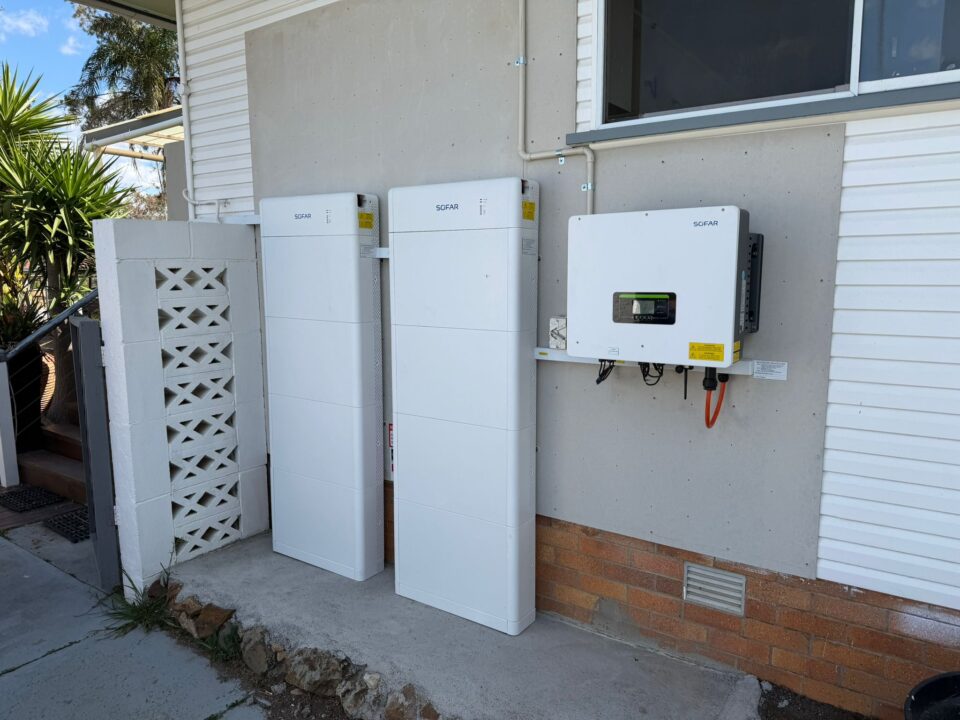
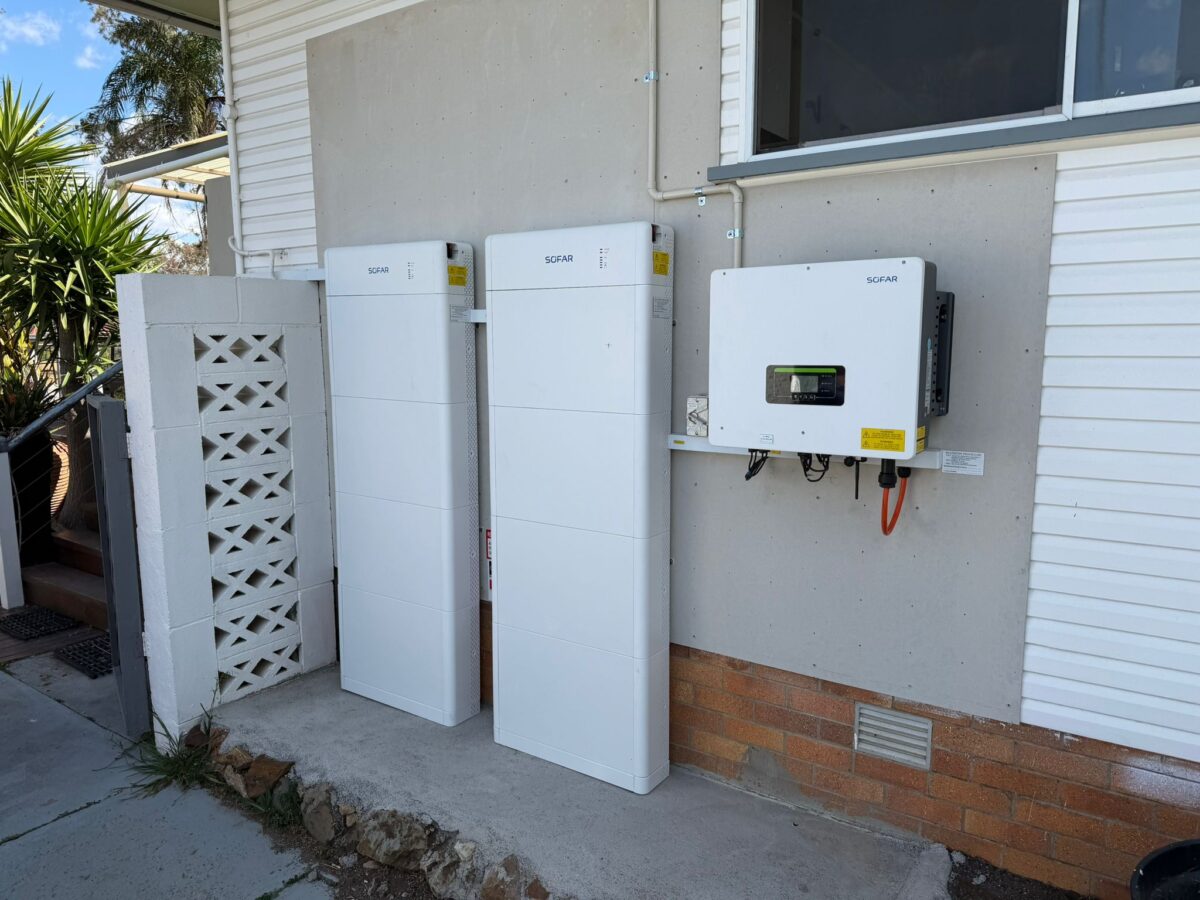
- Battery and inverter mounted in locations that don’t meet AS/NZS 5139 clearance or fire-separation requirements
- Isolation and switchgear that isn’t compliant, isn’t labelled, or isn’t there at all
- Cable runs undersized, unsupported, or unprotected against UV and heat
- Batteries never actually commissioned properly — the solar array isn’t charging the battery at all, and the homeowner doesn’t find out for months
- No blackout backup wired in, despite the customer paying for it as a line item
Roof penetrations that leak - And then, when the customer calls for warranty support, nobody answers the phone
That last one is the killer. A cheap system with a responsive installer behind it is a manageable problem. A cheap system with a disconnected phone number is a bill.
Why this keeps happening (we already wrote the explainer)
None of this is bad luck. It’s the predictable output of a business model.
We wrote a full breakdown of exactly how the discount operators run — how the lead is bought, how the salesperson is paid, how the install is subcontracted out to the lowest bidder on the day, and where the corners get cut so the number on the quote can stay where it is.
Read it here: The Hidden Cost of Cheap Solar and Battery Installations
If you’re currently holding two quotes and wondering why one is thousands lower, that article will explain the gap better than anything else on our site. The money doesn’t disappear. It comes out of the install.
The actual cost of doing it properly: 47 cents a day
Here’s the part that frustrates us most, because the gap is genuinely small.
Across a five-year payment term, the difference between a bargain-basement battery install and a properly engineered,
properly commissioned, fully compliant one works out to around 47 cents a day. Forty-seven cents. Less than a takeaway coffee a week.
For that, you get:
- An install designed and signed off to Australian Standards, not rushed to fit a subcontractor’s fifth job of the day Correct clearances, correct switchgear, correct labelling, correct protection
- A system commissioned and verified so it actually charges from your solar and actually delivers backup when the grid drops
- Documentation that stands up if you ever sell the house, claim on insurance, or get inspected
- A local business that answers the phone in year four
And critically — a system built to run its full service life. A properly installed quality battery should be delivering for around 20 years. A substandard one often needs replacing far sooner, and the replacement isn’t discounted just because you already paid once.
Do the maths on the cheap option
Pay less now, replace early, and you’ve paid twice for one battery — plus the rectification work, plus the years of underperformance you didn’t know you were getting, plus whatever the compliance issues cost you when they surface.
Forty-seven cents a day to not have that conversation is not a premium. It’s insurance with a guaranteed payout.
Already had a battery installed? Get it checked.
If your system was installed under the Cheaper Home Batteries Program and you’ve had any of the following, it’s worth an inspection:
Bills that went up, or barely moved, after installation
A battery that never seems to reach full charge from solar Backup power that doesn’t cut in during an outage
Faults, dropouts, or error codes you’ve been told to ignore An installer or retailer you can no longer reach
You can also raise concerns directly with your approved seller, and if that goes nowhere, with your state fair trading body, the Clean Energy Regulator, Solar Accreditation Australia, or the Energy & Water Ombudsman in your state.
TSBA offers a full compliance and performance inspection on existing battery systems.
We’ll tell you honestly what you’ve got — including if the answer is that it’s fine.